COUNSELING IN FORT WAYNE & ONLINE THROUGHOUT INDIANA
Find Your Way Forward
You don’t have to carry it all alone.
A welcoming community of therapists helping individuals, couples, ethically non-monogamous relationships, families, and children navigate trauma, anxiety, relationships, and life’s changes. Together, we’ll help you connect with care that fits.


TRAUMA-INFORMED

LGBTQ+ AFFIRMING
RELATIONSHIP-INCLUSIVE
HUMAN-CENTERED
No Matter What Brings You Here.
There is room for your whole story.
Some seasons leave us feeling stuck, disconnected, or unsure where to begin. Therapy offers a place to slow down, make sense of what you’re carrying, and discover a path that feels like your own.
Trauma & Healing
Identity & Self-Understanding
Anxiety & Overwhelm
Grief & Life Transitions
Relationships & Communication
Child & Family Concerns
Care Through Connection
Healing happens together.
Wayfinder is built around a simple conviction: supported, connected clinicians provide better care. Our therapists bring their own specialties and perspectives while learning, consulting, and growing together.
Compassionate care that honors your pace, needs, and lived experience.
A collaborative team that helps connect you with care that fits.
Hope with honesty—because progress matters more than perfection.
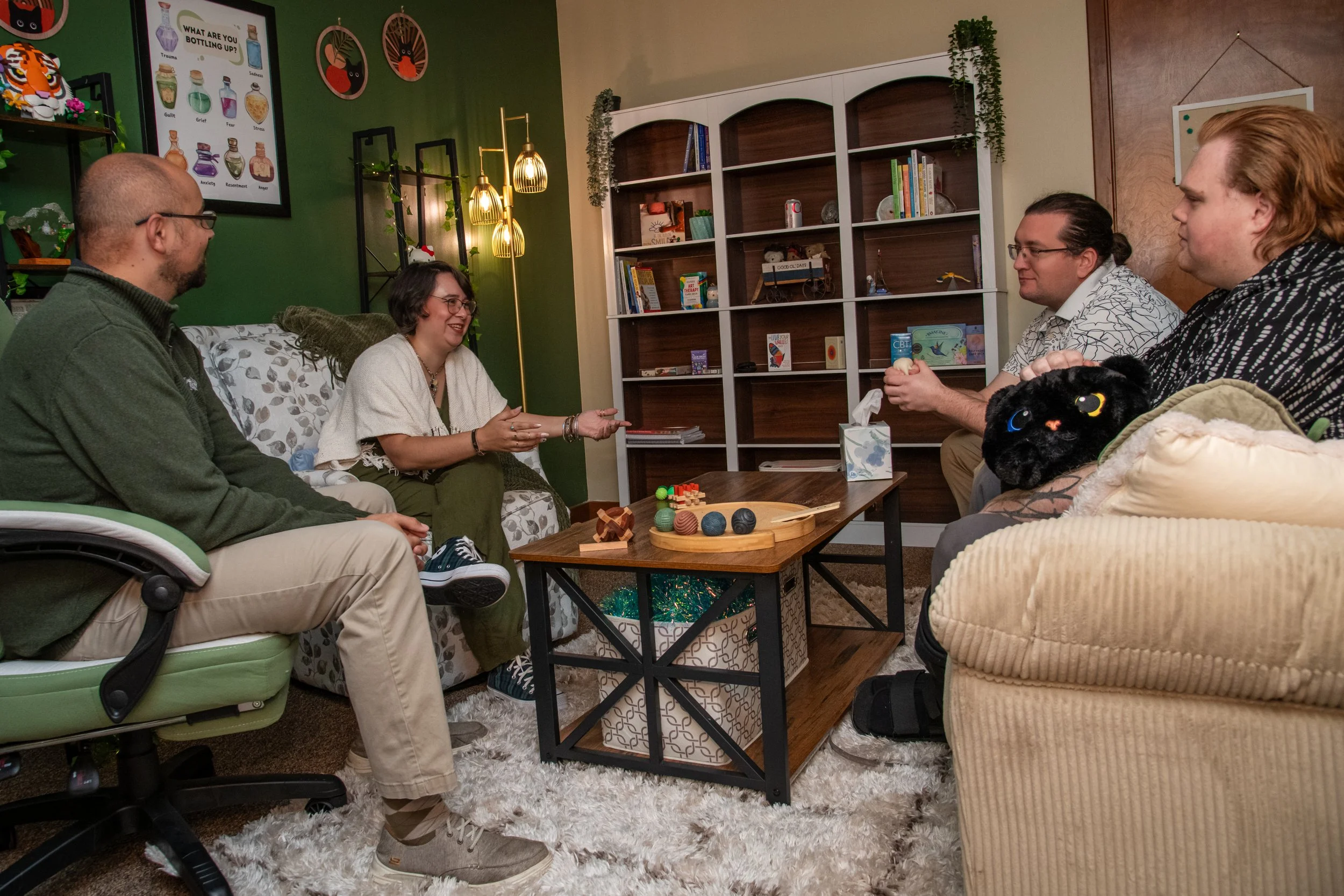
We welcome people across identities, cultures, relationship structures, and life experiences. Our practice is proudly affirming of LGBTQ+ clients, multiracial individuals and families, and ethically non-monogamous relationships.
Come as you are.
All of you.
You Belong Here
No shrinking. No translating yourself into someone easier to understand.

Frequently Asked Questions
-
You don’t have to reach a breaking point to deserve support. Maybe you’re getting through work, answering texts, and taking care of everyone but by the end of the day, you have very little left for yourself. Maybe the same worries keep circling, a relationship feels harder than it used to, or you just haven’t felt like yourself lately.
It’s easy to think, “Other people have it worse,” or “I should be able to handle this.” But you don’t have to prove that things are bad enough. Therapy can be a place to understand what’s been weighing on you, figure out what you need, and have someone in your corner while you work toward change.
And if all you can tell us is, “Something feels off, and I’m not sure where to start,” that’s plenty to begin with.
-
Sometimes your mind goes blank the moment you sit down even when it’s been busy all week.
You can start with “I don’t know what to talk about,” and we’ll help you find a starting point. We might ask about your week, revisit something you mentioned before, or get curious about a feeling you can’t quite name. You’re welcome to bring notes, too, if the important things tend to come to you in the car afterward.
There’s room for quiet, uncertainty, and taking your time. You don’t have to fill every silence or make every session feel profound. Figuring things out together is part of the work.
-
Yes. Maybe you replay conversations long after they’re over, spend more time imagining what could go wrong than enjoying what’s going well, or feel overwhelmed by decisions that seem easy for everyone else. Even when you finally have time to rest, your mind keeps going.
In therapy, we can explore what fuels those patterns and find ways to make them more manageable. That might mean learning how to step back from spiraling thoughts, recognizing when you’re taking on too much, or practicing boundaries without spending the rest of the day feeling guilty. We’ll also make room for the real pressures in your life—sometimes you need more support, not another coping skill on your to-do list.
It’s okay to have some worries. We can work toward having more breathing room, more choice in how you respond, and more moments when you feel present in your own life.
-
Yes. Something can be long over and still affect how you feel, connect with people, or respond to stress today. Maybe you find yourself bracing for something to go wrong, struggling to trust someone who’s been kind to you, or having a strong reaction that leaves you thinking, “Why did that hit me so hard?”
You might also wonder whether what happened “counts,” especially if it was treated as normal at the time. You don’t need to settle on a label before talking about something that still hurts.
In therapy, we can explore those connections at a pace that feels manageable. You don’t have to share every detail right away or arrive ready to revisit your hardest memories. We’ll start with what you need now and work together toward helping the present feel less shaped by the past.
-
Yes. You might start with dishes, money, or who said what and somehow end up in the same painful place. One of you feels unheard, the other feels criticized, and you both leave wondering how it got there again.
Couples counseling can help you slow that pattern down and understand what keeps it going. What happens just before the conversation turns? What are you each hoping the other person will understand?
Together, we can practice expressing what matters, hearing each other, and finding your way back after conflict.
It’s okay to not agree on everything, and you don’t have to wait until the relationship is close to ending. Even “We love each other, but we’re stuck” is a meaningful place to start.
-
Sometimes children tell us they’re struggling. Other times, it shows up as bigger reactions, more arguments, pulling away, or “I don’t know” whenever you ask what’s wrong. You might notice changes in sleep, friendships, school, or their willingness to do things they usually enjoy.
Those changes don’t automatically mean something is wrong. But if they persist, make everyday life harder, or leave you wondering how to help, it’s reasonable to reach out. It’s okay to not know the cause before asking for support.
Counseling gives children and teens ways to express themselves that fit their age and needs through conversation, play, or creative activities. We can also work with you to better understand what they’re experiencing and find ways to support them at home. Asking for help doesn’t mean you’ve failed as a parent. You’re allowed to have someone in your corner, too.
-
Start with what matters to you: someone who understands your concerns, respects your identity and relationships, and works in a way that feels helpful. Read our clinician profiles and see whose approach sounds like a conversation you’d want to have. If you’re unsure, tell us a little about what you’re looking for—we can help you choose.
It’s normal to feel unsure after one appointment. Building trust can take time, and you’re allowed to ask questions, share preferences, or say, “That didn’t quite land for me.” A good fit leaves room for you to be honest, including about therapy itself.
And if it still doesn’t feel right, you won’t hurt our feelings by saying so. We can talk about what’s missing and help you explore another clinician or referral. You don’t owe a therapist continued appointments just because they’re nice. Your care should fit you.
Your Next Step Can Be Small
Let’s find the right support for you.